The mold that changed medicine: the long journey of penicillin from a forgotten dish to the front
In 1928, Alexander Fleming noticed a strange mold spot on a dish with bacteria. For this observation to save millions of lives, another twelve years were needed, Oxford, American corn, and one rotten melon.
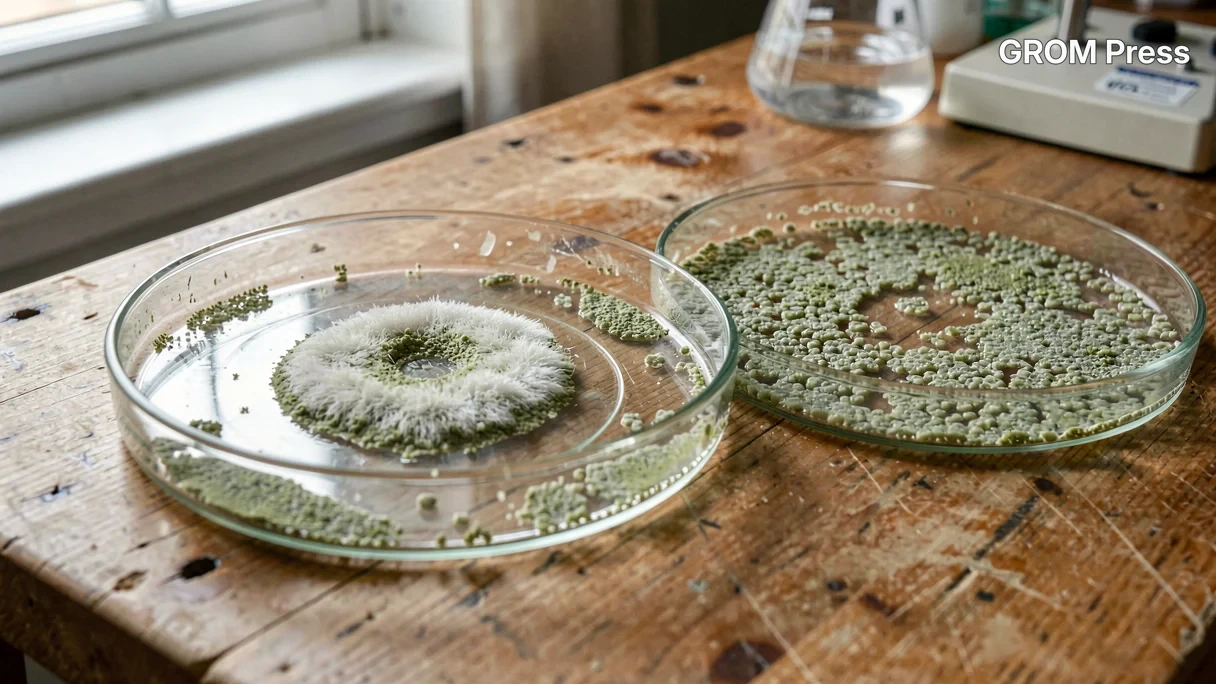
In early September 1928, London bacteriologist Alexander Fleming returned from vacation to his cramped laboratory at St. Mary's Hospital. Stacks of Petri dishes with staphylococci, left before his departure, were piled on the table. Sorting through them, Fleming noticed a fuzzy patch of mold on one dish, and around it a clear zone where bacterial colonies seemed to have melted away.
Many scientists would have thrown away the spoiled dish. Fleming kept it. Thus begins one of the best-known stories in medicine, which in reality turned out to be much longer and more complicated than the tale of a lucky accident.
The observation that was almost forgotten
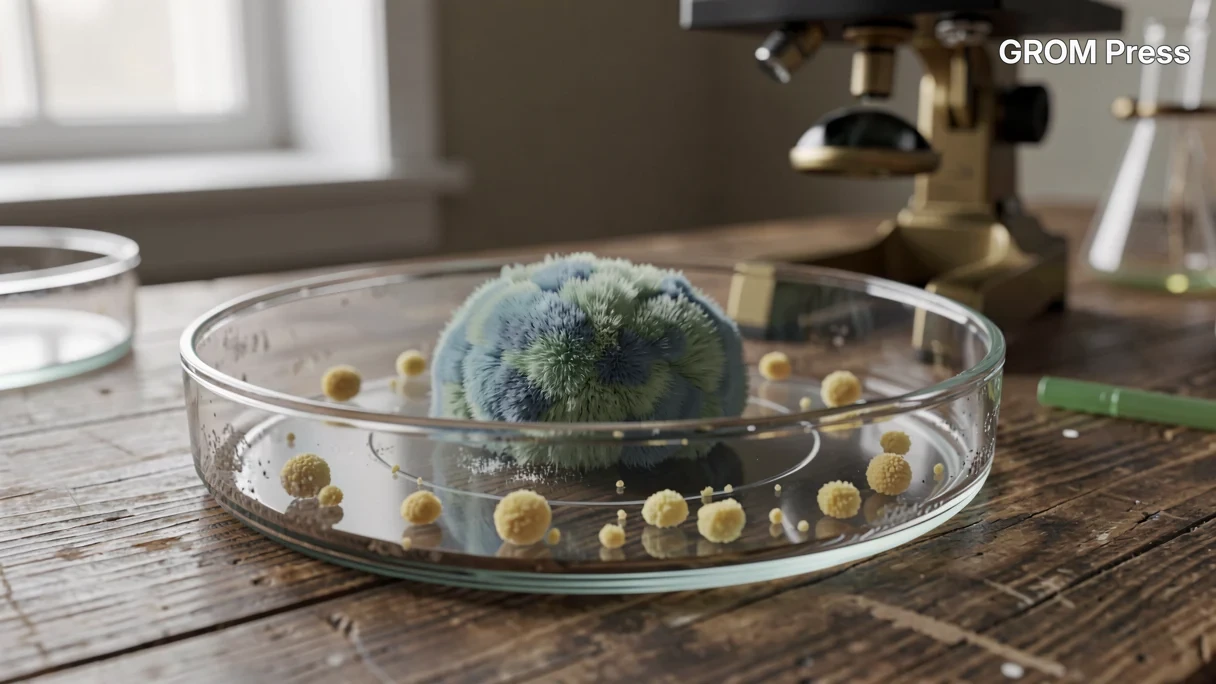
Fleming grew the mold separately and confirmed that it released into the broth a substance lethal to many bacteria, including the pathogens of sore throat, pneumonia, and purulent infections. The mold turned out to be a fungus of the genus Penicillium, and Fleming named the active substance penicillin. In 1929 he published an article about it.
Then the matter stalled. Penicillin was unstable, Fleming and his assistants could not isolate it in pure form, and the amount of substance in the broth was negligible. Fleming saw it more as a useful laboratory reagent than as a medicine, and although he long maintained the fungal culture and distributed it to colleagues, no major breakthrough occurred. For almost ten years the discovery lay quietly in the scientific literature.
How the fungal spores got onto the dish is not precisely known. The popular version says they flew in from the mycology laboratory one floor below, and the unusually cool, then warm weather of those weeks allowed the mold to grow before the bacteria. This is a plausible reconstruction, but not an established fact.
Oxford takes up the task
In the late 1930s, in Oxford, a group led by Australian Howard Florey and biochemist Ernst Chain, who had fled Nazi Germany, decided to systematically study natural antibacterial substances. Fleming's article caught their eye, and penicillin became one of the main candidates.
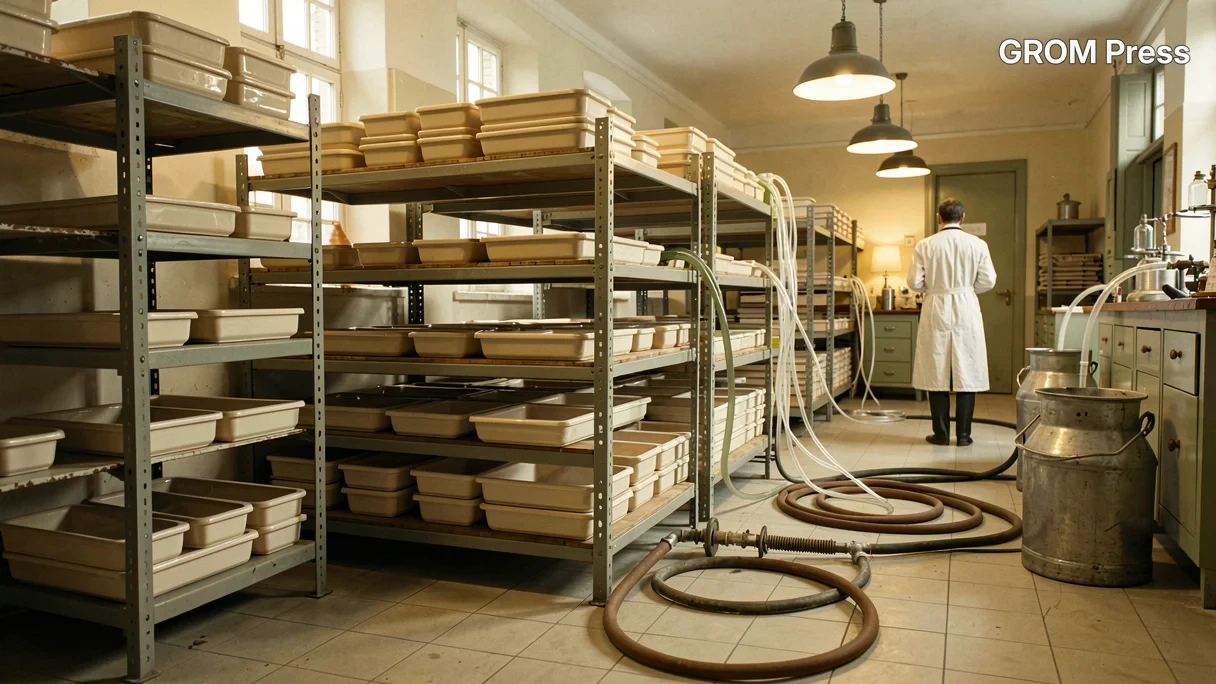
The key role was played by biochemist Norman Heatley, a jack-of-all-trades. He devised how to extract penicillin from broth by transferring it between solvents at different acidity, and constructed an entire factory from improvised means. The mold was grown in hospital bedpans, milk churns, bathtubs, and then in specially ordered ceramic vessels. The cultures were tended by young female laboratory staff.
In May 1940, as Europe was collapsing under the blows of the Wehrmacht, the Oxford team conducted the decisive experiment: eight mice were given a lethal dose of streptococci, and four of them also received penicillin. By morning the untreated mice had died, the treated ones survived. It is said that Heatley spent that night in the laboratory, checking the animals.
The first patient and empty vials
The human trial proved dramatic. In early 1941, at the Oxford hospital lay policeman Albert Alexander with severe blood poisoning, which, according to the popular version, began with a scratch. After penicillin injections, he felt noticeably better within a day.
But the drug was catastrophically scarce. They tried to extract it back from the patient's urine to administer again, and still the supply ran out. The infection returned, and Alexander died. This case immediately showed two things: penicillin works, and it must be produced on a completely different scale.
In war-torn Britain, under bombardment, such capacities did not exist. In the summer of 1941, Florey and Heatley flew to the United States, carrying with them the precious fungal culture. A year earlier, when Britain awaited the German invasion, laboratory staff, according to a well-known story, rubbed spores into the lining of their jackets to save the culture, even if they had to flee.
Corn, melon, and huge vats
In the American city of Peoria, at the Ministry of Agriculture laboratory, fermentation specialists found the first major solution. The addition of corn extract, a byproduct of starch production, multiple times increased penicillin yield.
The second solution was a more productive strain. It was sought everywhere, sending mold from all over the world to the laboratory. The most successful sample, according to the well-known story, was found on a moldy melon from a local market. Descendants of this strain, after irradiation and selection, yielded hundreds of times more substance than Fleming's fungus.
Third - industrial technology. Instead of flat vessels, pharmaceutical companies switched to growing the fungus in deep tanks with agitation and air supply. During the war years, the US government made penicillin a national priority, and dozens of companies worked on it simultaneously, exchanging information, which in peacetime would have been almost unthinkable. The US chemical industry turned a laboratory curiosity into a mass-produced product in record time. If in 1942 there was enough penicillin for only a handful of patients, then by the Allied landings in Normandy in the summer of 1944 its stocks, according to widespread estimates, already numbered millions of doses.
A few final facts
- One of the first Americans saved by penicillin in 1942 was Anne Miller, who was dying of blood poisoning. She lived for more than half a century after that.
- The 1945 Nobel Prize in Physiology or Medicine was shared by three: Fleming, Florey and Chain. Heatley was not among them.
- Already in his Nobel lecture, Fleming warned that improper use of penicillin would lead to the emergence of resistant bacteria.
- The structure of the penicillin molecule was determined using X-rays by Dorothy Hodgkin, who later also became a Nobel laureate.
- Fleming's fungus was long considered the species Penicillium notatum, but modern genetic analysis classifies it as Penicillium rubens.
Chance and the prepared mind
The story of penicillin is often told as a fairy tale of brilliant inspiration. In fact, it is a story of how many people are needed for one observation to become a medicine: an attentive bacteriologist, stubborn Oxford researchers, an inventive laboratory assistant, American fermentation specialists, and engineers who built huge tanks. The mold on the dish was only the first note. The melody was written over twelve years, and saved lives became possible only because none of the participants abandoned the work halfway.
Source: GROM.PRESS