City on piles: why Venice has stood on wood for many centuries and how it is protected from the sea
Beneath the palaces and churches of Venice lies an inverted forest of millions of wooden piles. We explain why they do not rot, where high water comes from, and how the MOSE system works.
If the water and earth could be removed from beneath Venice, an amazing picture would open up beneath the city: a forest growing downward. Millions of trunks, driven vertically into the lagoon floor, stand in dense rows, and on these trunks rest palaces, bridges, bell towers and cathedrals. Many of these piles are already several hundred years old. And the main question that everyone who learns about this asks themselves: why has wood, having spent centuries in water, still not rotted?
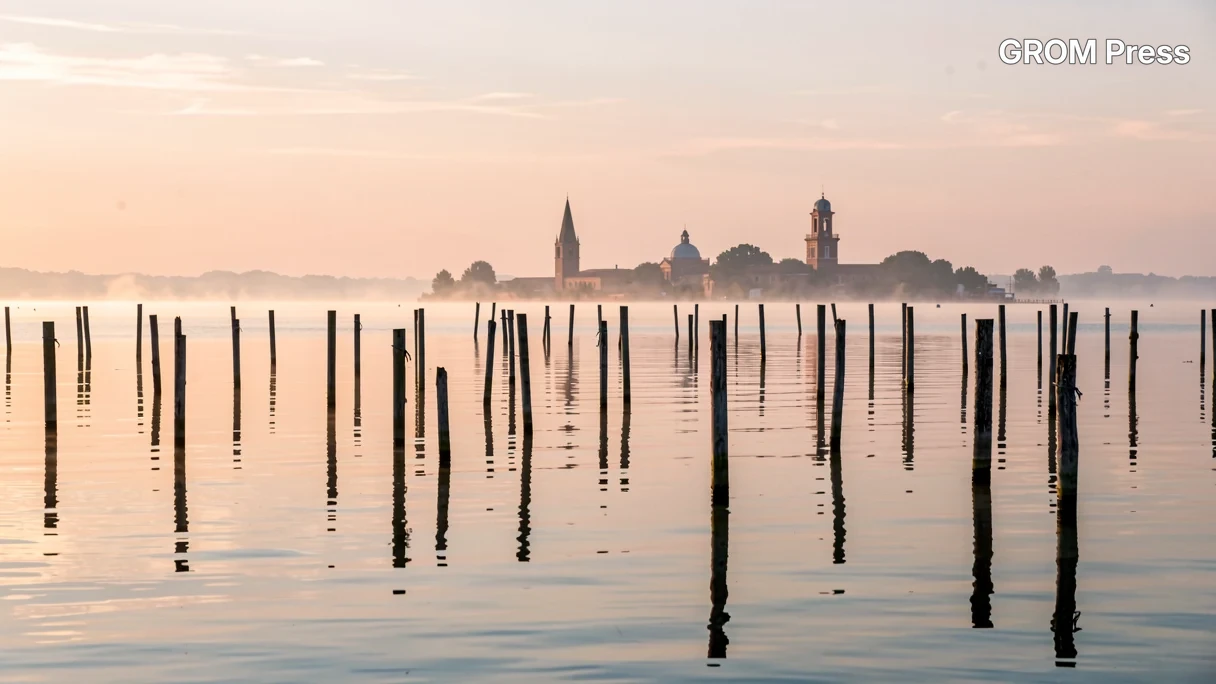
Refuge among the swamps
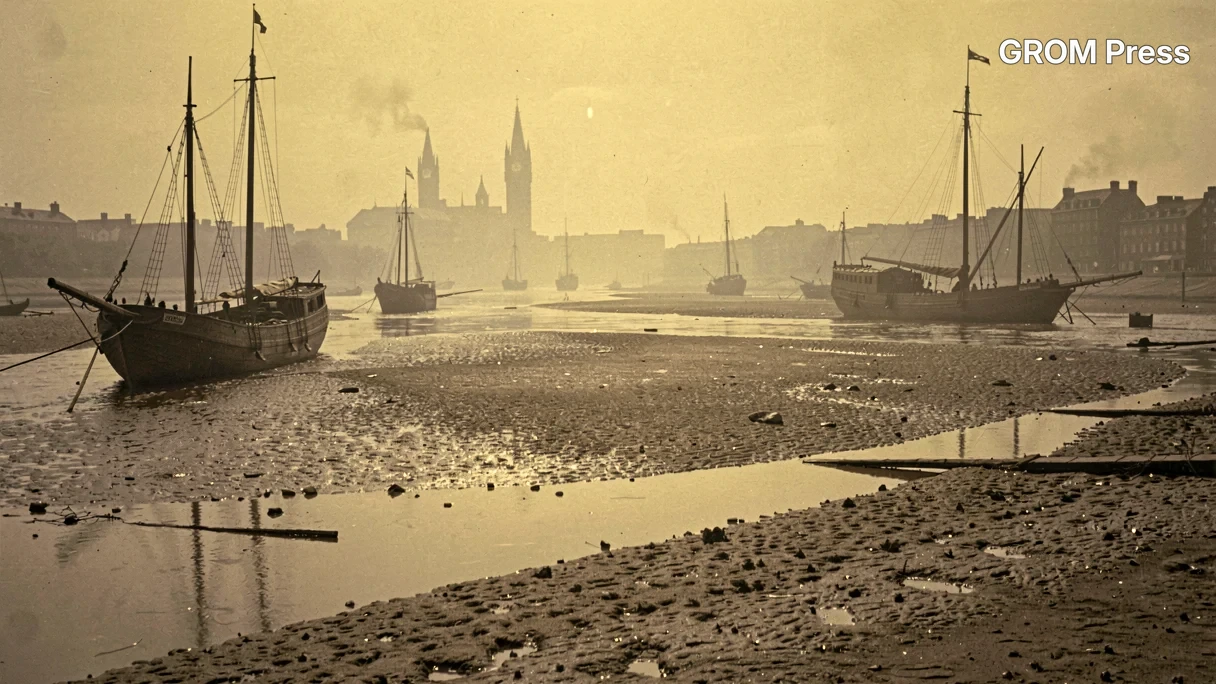
Venice arose where a city, it would seem, cannot be built. The lagoon on the northwestern shore of the Adriatic is a shallow area with muddy islets, separated from the sea by narrow sandy spits. In the era of late Antiquity and the early Middle Ages, when mainland Italy was ravaged by wars and invasions, inhabitants of coastal cities sought refuge here. Water protected better than fortress walls: to pass through the lagoon, one had to know its fairways.
Gradually, temporary settlements turned into a city. But there was little land, and what there was turned out to be soft and unreliable. Building stone buildings directly on the silt meant dooming them to slow settling and cracks. The Venetians found a solution that seems simple only at first glance.
How a house stands on water
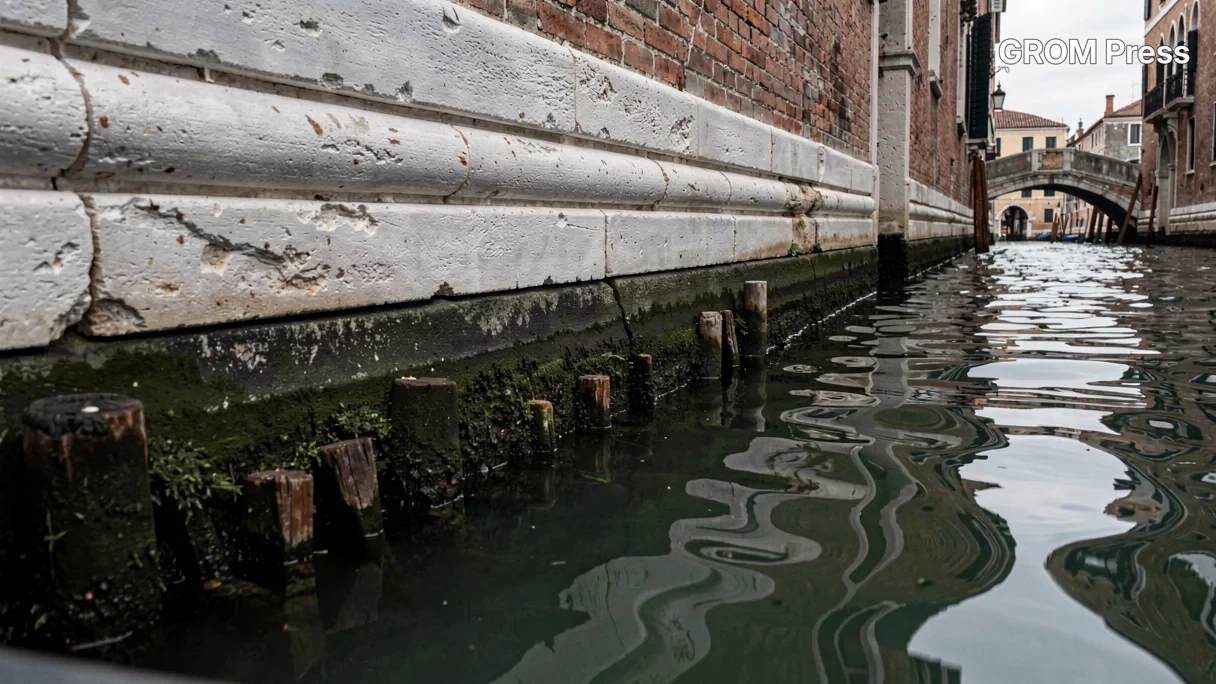
Construction began with wooden piles being driven into the ground. Larch, oak and alder were most often used. The piles were relatively short, usually several meters, and were driven very tightly, almost side by side. Their task was not so much to reach hard rock as to compact the soft soil and rest on a denser layer of clay, which the Venetians call "caranto".
Horizontal decking of boards and beams was laid on top of the piles, and stone masonry began to be laid on it. The lower rows, which come into contact with canal water, were made of Istrian stone. This dense light limestone was brought from the Istrian peninsula, and it poorly lets water through, protecting the brick walls above from dampness and salt. It is precisely this white band at the base of the houses that everyone who sails along the Grand Canal notices.
The scale is impressive. According to traditional estimates, about twelve thousand piles are under the Rialto Bridge, and under the Baroque basilica of Santa Maria della Salute, according to legend, more than a million. Wood for them was brought from forests on the mainland, and the Venetian Republic carefully guarded its forest lands, since both construction and the fleet depended on them.
Now about the main secret. Wood rots due to fungi and bacteria, and most of them need oxygen. Piles immersed in water-saturated silt and clay are almost without access to air. Fungi cannot live there, and destruction is slowed down to a huge degree. In addition, over time the wood becomes impregnated with mineral substances from the environment. Recent studies show that some bacteria still slowly destroy the piles, but the pressure of the building and the compacted soil around keep the structure in equilibrium. Therefore, the danger to Venice today comes not so much from below, but from above, from water.
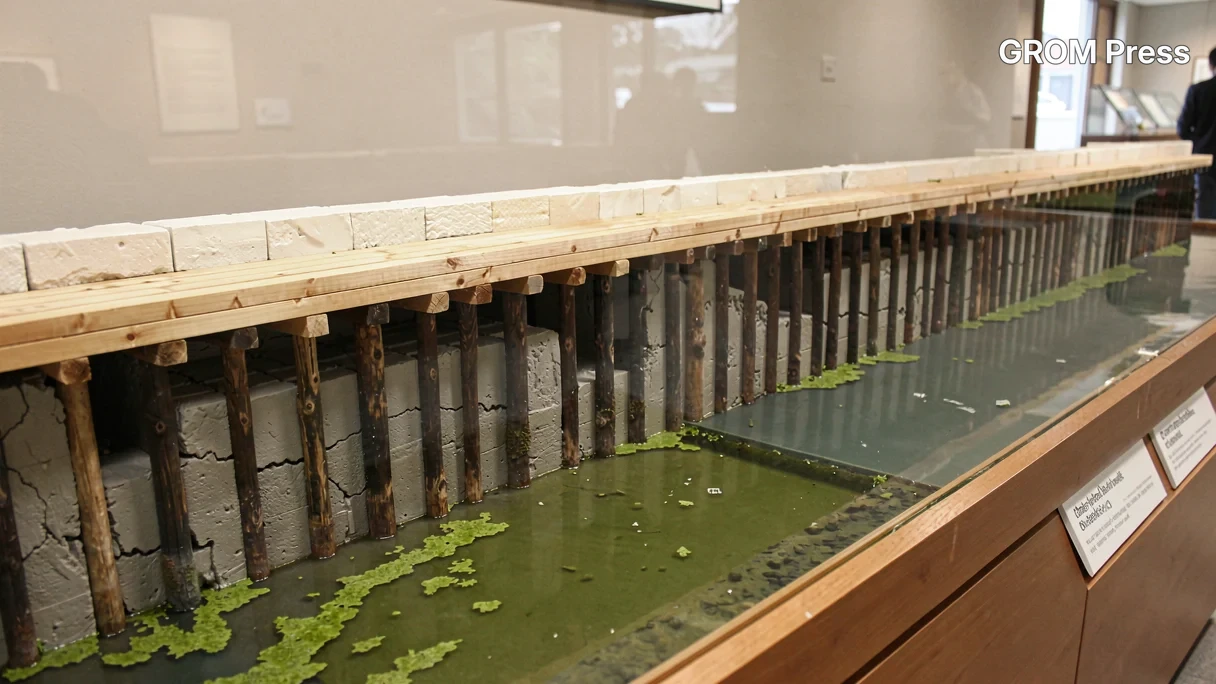
High water
The Venetians call this phenomenon "acqua alta", high water. In autumn and winter, when a strong tidal surge coincides with the southeast wind sirocco, driving water from the Adriatic into the lagoon, and low atmospheric pressure, the sea rises and spills onto the streets. St. Mark's Square, one of the lowest points of the city, is flooded first.
The strongest flood in the modern history of the city occurred on November 4, 1966, when the water level rose approximately 194 centimeters above the conditional zero. Almost the same disaster was repeated in November 2019, when the water reached about 187 centimeters and flooded a large part of the city, including the crypt of St. Mark's Cathedral.
The problem is exacerbated by the fact that Venice is slowly sinking. In the 20th century, subsidence was strongly accelerated by pumping groundwater for industry on the mainland, and it was banned in the 1970s. Natural subsidence continues, and sea level is rising. Floods that used to occur rarely have become frequent guests.
MOSE: a wall that sleeps on the bottom
The answer was the MOSE system. Its name is decoded as Experimental Electromechanical Module and at the same time alludes to the biblical Moses, who divided the sea. In the three straits connecting the lagoon with the Adriatic, at Lido, Malamocco and Chioggia, 78 huge movable gates are installed on the bottom.
In normal times the gates lie on the bottom, filled with water, and are not visible. When forecasters warn of severe high water, compressed air is pumped into the gates. They rise, pivot around their hinges and stand above the water, cutting off the lagoon from the sea for the duration of the tide. When the danger passes, the air is released and the gates sink again.
Construction took almost two decades, cost billions of euros and was accompanied by a major corruption scandal. The system was first raised to protect the city in October 2020, and since then it has repeatedly saved St. Mark's Square from flooding. However, it has critics. Each raising is expensive, and frequent closure of the lagoon hinders shipping and the water exchange on which the ecology depends. If sea level continues to rise, the gates will have to be raised more and more often, and then the lagoon risks turning into a stagnant pool.
A few final facts
- Venice is located on more than a hundred islands, connected by hundreds of bridges.
- Venetian piles are an example of how wood can be preserved for centuries without access to oxygen, and a similar principle was used in the old foundations of Amsterdam.
- White Istrian stone at the base of houses acts as waterproofing, separating the brickwork from salt water.
- Under the rules, MOSE is raised when the forecast water level is around 110 centimeters and above, so minor floods the city still faces on its own.
- During high water, wooden walkways on supports are laid out along the streets, so pedestrians can walk dry.
Balance on water
Venice exists thanks to a fragile balance: between wood and silt, between sea and lagoon, between human perseverance and natural forces. Its founders did not fight the water directly, but found a way to use its properties, turning a swamp into a foundation. Today the city again has to find such a balance, only the scale of the task has grown. Perhaps the most remarkable thing about Venice is not that it stands on wood, but that for more than a thousand years people have been inventing anew how to make it continue to stand.
Source: GROM.PRESS