Carlsen cheated the regulations: chess players in Budapest stopped showing up for games
At the Total Chess tournament in Budapest, Magnus Carlsen twice failed to appear for decisive games in "fast classical" chess to preserve his rating and avoid losses. His actions caused a scandal: other grandmasters, including Rapport and Mishra, followed his example. Although Asaubaeva and Nepomniachtchi remained calm, observers, including Nakamura and Sutovsky, condemned Carlsen's behavior as unacceptable and unsporting. The tournament was created in response to Carlsen's criticism, but his methods became its trademark.
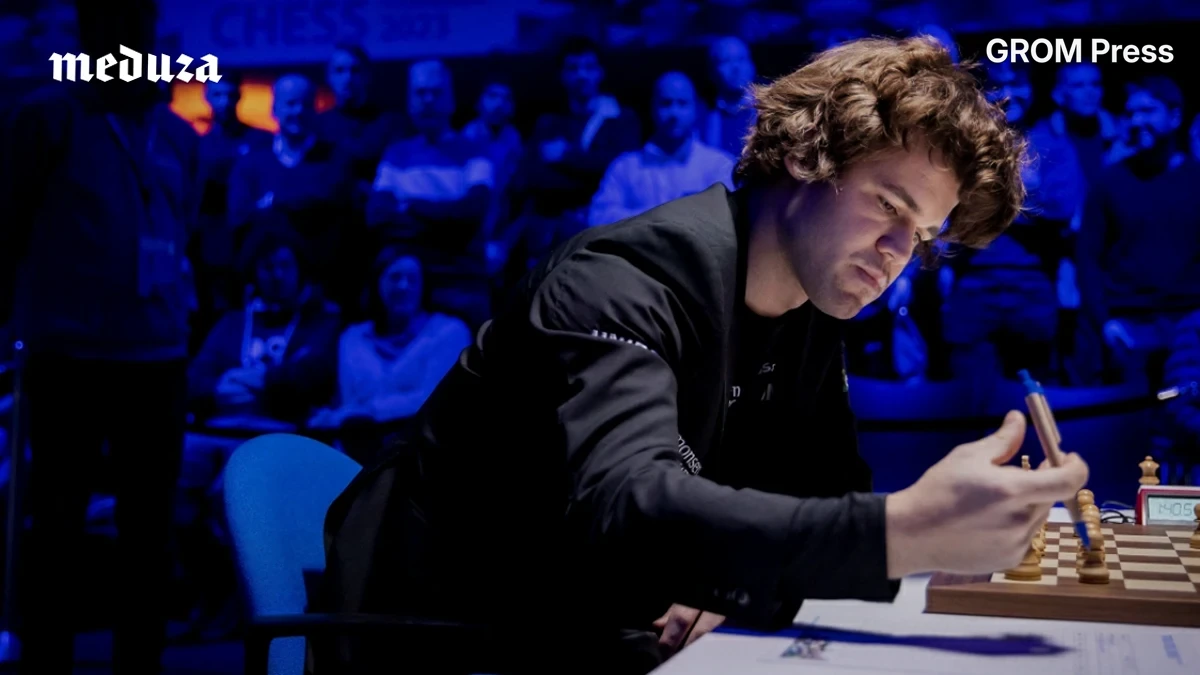
Magnus Carlsen, the undisputed leader of the FIDE world rating since 2011, once again became the center of attention in the chess world. In November 2026, during the Total Chess tournament in Budapest, he used a non-standard but effective method: he simply did not show up for decisive games in "fast classical" chess to preserve his rating. This allowed him to avoid losses even if he was losing in faster formats. On the first day of the match against Bibisara Asaubaeva, he set the score at 11.5:0.5, but did not appear for the last game - and, despite 8 points, did not win the day. On the second day he repeated the tactic, and the match ended in a draw 10:10. With the subsequent opponent, Vladislav Artemyev, Carlsen did not come immediately for two rapid games, after which he won in "fast classical" and won the match with a score of 11:9. His actions were not just non-standard - they were strategically thought out and aimed at minimizing risks to his rating.
Carlsen's behavior caused mixed reactions. Some participants, including Richard Rapport and Abhimanyu Mishra, followed his example - refusing to come to decisive games, despite the fact that this violated the regulations. Bibisara Asaubaeva, despite the losses, did not express condemnation, but simply published photos from the games Carlsen attended. Ian Nepomniachtchi, who also struggled at the tournament, wrote in Telegram: "The smartest ones just don't show up for games. There is something to learn," indicating acceptance of his method as a tactic, not as unacceptable behavior.
Observers, including American Hikaru Nakamura, who did not participate in the tournament, called Carlsen's behavior "unacceptable" and emphasized that the Total Chess format was developed as a response to the criticism Carlsen leveled against existing tournaments. Grandmaster and FIDE advisor Emil Sutovsky also stated: "It is hard to comment on such a pathetic unsporting behavior," emphasizing that this behavior contradicts the spirit of competition and raises questions about fairness in chess. Such reactions indicate that Carlsen's behavior not only caused controversy, but also became a subject of discussion in the professional community, where he was previously one of the most active critics of existing formats.
The Total Chess tournament, held for the first time, was created to determine the strongest chess player with different time controls - blitz, rapid and "fast classical". However, its regulations, which assumed a strict order of games, were violated by Carlsen and other players, which undermined trust in the new format. As a result, instead of becoming an example for others, Carlsen became a symbol of how one can use the system for one's own interests, even if this contradicts its basic principles. This is not just a scandal - it is a challenge that forces the chess community to reconsider what fair play and sporting spirit mean in modern conditions.
Source: GROM.PRESS