Anthropic Mathematician Claims AI Chatbot Proved Riemann Hypothesis in Six Weeks
Levent Alpöge, a mathematician and Anthropic employee, claims to have used the company’s non-public Claude AI chatbot to produce a 250,000-page proof of the Riemann hypothesis over six weeks. The proof, written in Lean, a formal proof language, is unprecedented in scale and would, if verified, be among the most significant mathematical breakthroughs in history. Alpöge expressed frustration over the timing, coinciding with Anthropic’s public stock listing, but denied any intent to exploit the event.
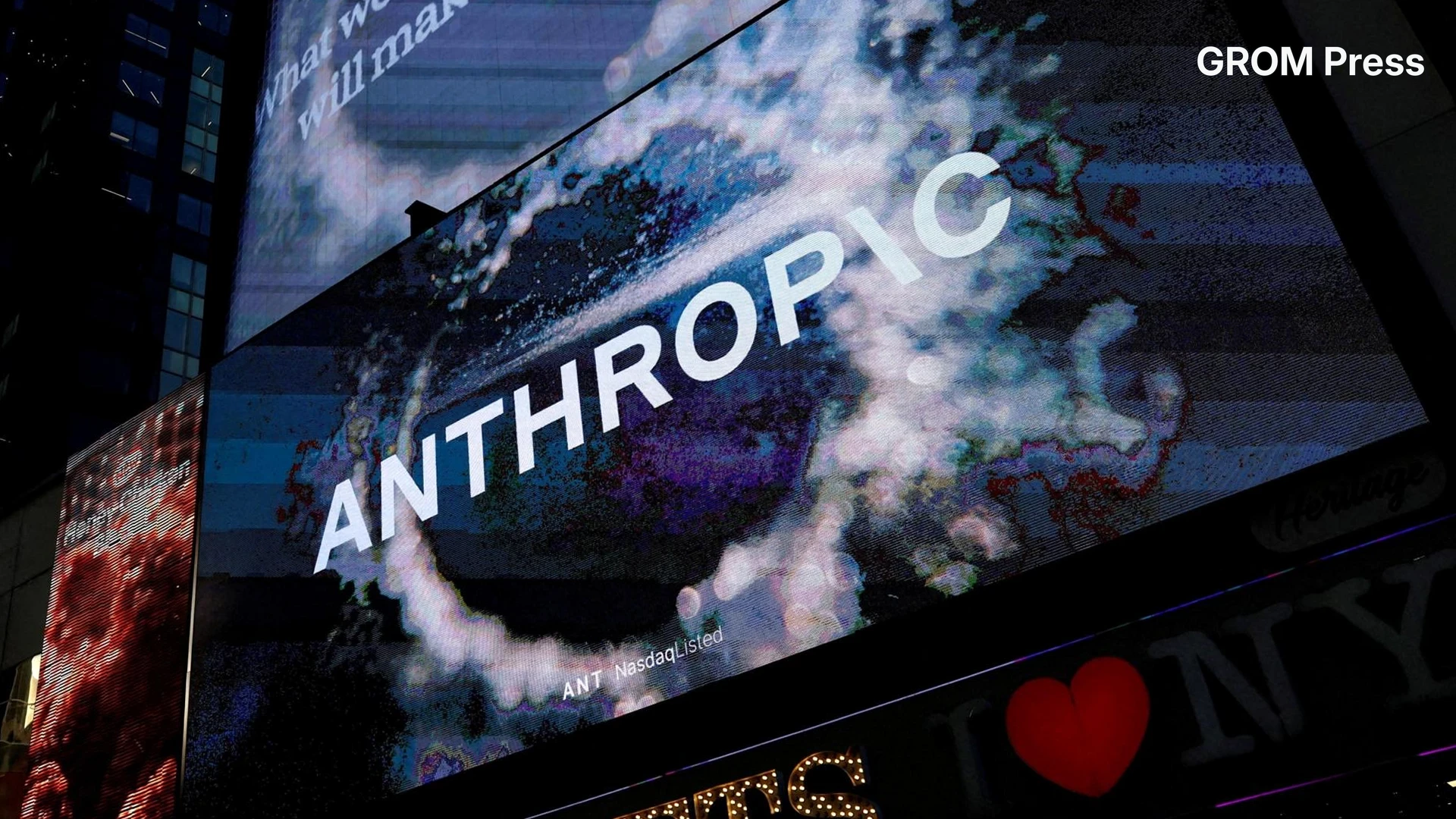
Levent Alpöge, a mathematician employed by Anthropic, claims to have used the company’s proprietary AI chatbot, Claude, to construct a formal proof of the Riemann hypothesis over a six-week period. The proof, written in Lean - a programming language designed for verifying mathematical proofs - spans more than 250,000 pages. Alpöge presented the work externally on Friday, the day after Anthropic’s initial public listing on the U.S. stock market. He noted that the timing was inconvenient, as he had been hesitant to announce the result until after the company’s public debut. He emphasized that his motivation was not tied to the timing but to the urgency he felt to share the result. He stated, “I am clearly unilaterally responsible for feeling I just could not live if I waited even longer,” and rejected suggestions that the timing was opportunistic.
The Riemann hypothesis, named after Bernhard Riemann, is a 170-year-old conjecture concerning the distribution of prime numbers along the number line. Its resolution would have profound implications across mathematics, as prime numbers underpin much of modern number theory and cryptography. Alpöge’s proof was generated using a non-public version of Claude, which the company has not officially released to the public. The proof’s sheer size and complexity underscore its ambition, and if validated, it would rank among the most consequential mathematical achievements in history.
Terence Tao, a renowned mathematician, acknowledged the potential historical significance of the proof but cautioned that its verification would require substantial effort. He remarked, “I imagine the digestion process will take some time, though in this case at least we have a human author to communicate with to assist with this task.” Tao’s comment highlights the challenge of validating such an extensive and complex proof, even with human oversight.
Alpöge’s claim follows a trend of AI-driven mathematical breakthroughs. In September, OpenAI announced that employees using a non-public version of its AI tools had solved part of the Navier-Stokes equations in just 88 hours, using over 10,000 AI agents. That result sparked debate within the academic community, with critics warning that AI’s role in mathematics could erode standards of rigor. A group of mathematicians issued a letter stating that AI firms’ public claims of major solutions risk undermining the integrity of mathematical science, citing a “misalignment between the outcome of the use of AI and its initial purpose.”
Anthropic has also publicly reported progress in physics and other areas, and in October, OpenAI released claims of progress on 372 additional higher mathematics problems. The verification of these results, including Alpöge’s, will take months or longer, as experts must carefully audit the proofs. The broader implications of AI in mathematics remain contentious, with scholars debating whether these tools should be seen as collaborators or disruptors in the pursuit of mathematical truth.
Source: GROM.PRESS