Curiosity Captures Rare Twilight Clouds Over Gale Crater on Sol 5061
NASA’s Curiosity rover documented drifting twilight clouds over Gale Crater on October 31, 2026, during the 5,061st Martian day of its mission. The images, captured by the rover’s navigation cameras, show ephemeral atmospheric phenomena that appear briefly each Martian autumn. These clouds, visible only for short durations, are a seasonal occurrence in the region. The rover, built by NASA’s Jet Propulsion Laboratory and managed by Caltech, has been exploring Gale Crater for over 14 years.
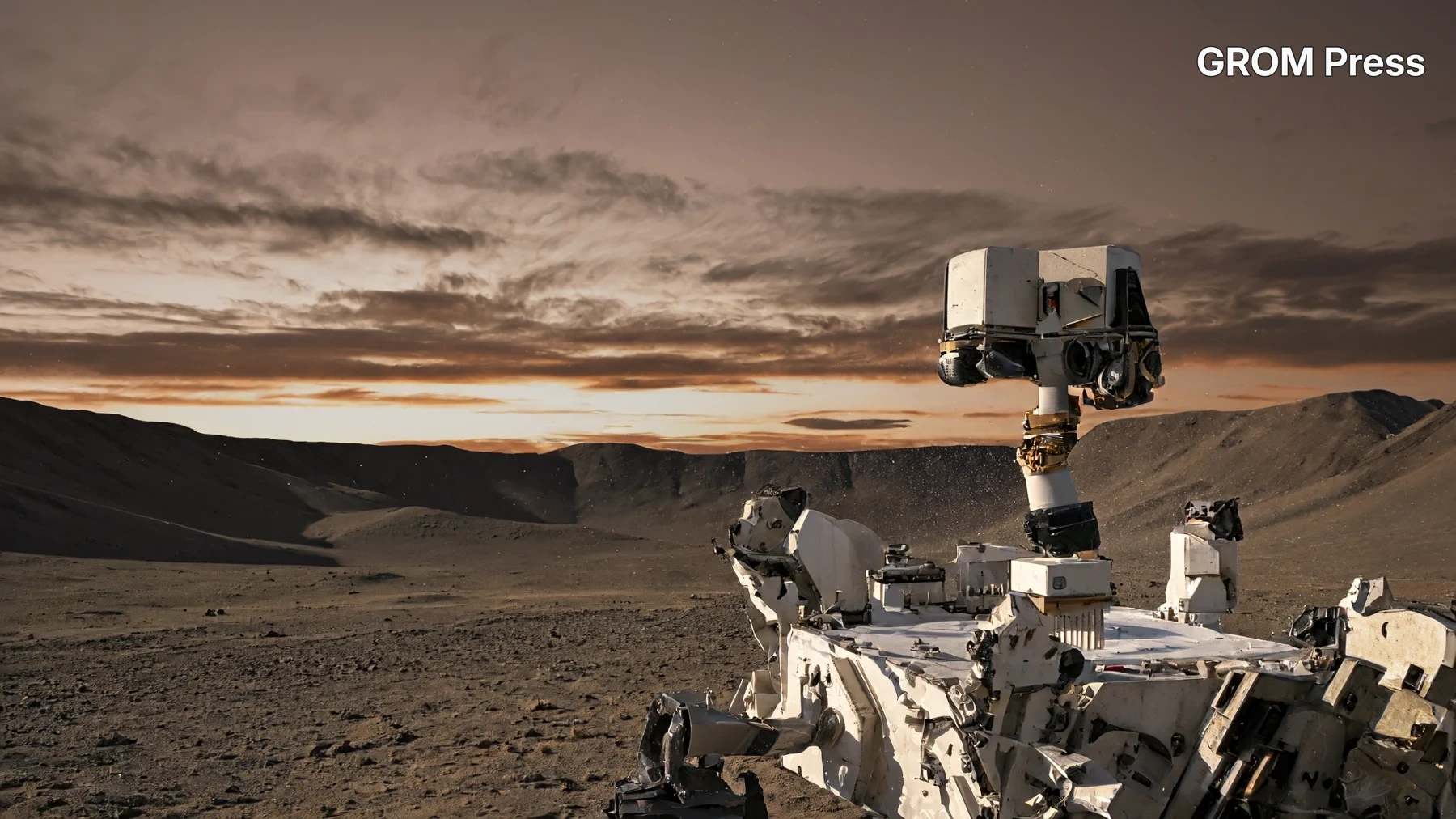
On October 31, 2026, during the 5,061st Martian day, or sol, of its mission, NASA’s Curiosity rover captured images of drifting twilight clouds over Gale Crater. The photographs, taken by the rover’s navigation cameras, depict clouds that appear only briefly during the Martian autumn. These atmospheric formations, known as twilight clouds, are a seasonal phenomenon observed in the region and typically vanish within minutes after sunset.
The Curiosity rover, constructed by NASA’s Jet Propulsion Laboratory (JPL) and managed by the California Institute of Technology (Caltech) in Pasadena, has been operating in Gale Crater since its landing in 2012. Over its more than 14-year tenure, the rover has provided continuous data on Mars’ geology and climate, including seasonal atmospheric events. The images of twilight clouds were captured post-sunset, a time when atmospheric conditions allow these clouds to form temporarily before dissipating.
Twilight clouds are a rare and transient feature of Mars’ atmosphere, appearing only during specific seasons and for short durations. Their formation is linked to localized temperature changes and dust dynamics in the region. The observation by Curiosity contributes to ongoing scientific efforts to understand Mars’ atmospheric behavior, including how seasonal shifts influence cloud formation and distribution. This data may help researchers model Martian weather patterns and assess the planet’s climate history.
The rover’s navigation cameras, designed for terrain mapping and obstacle avoidance, were repurposed for capturing atmospheric phenomena. This capability demonstrates the versatility of the rover’s instruments and their utility beyond primary mission objectives. The images, credited to NASA/JPL-Caltech, are part of the Mars Science Laboratory mission, which falls under NASA’s broader Mars Exploration Program.
The documentation of twilight clouds adds to the growing body of evidence regarding Mars’ atmospheric variability. While not directly linked to habitability, such observations support broader planetary science goals, including understanding atmospheric chemistry, seasonal cycles, and the potential for past or present water-related processes. The rover’s continued operation underscores its value as a long-term scientific asset on the Martian surface.
Source: GROM.PRESS